ESG and Environment
ESG and environmental protection are becoming a core element of how companies operate, regardless of their size or industry. Growing regulatory requirements, market pressure, and expectations from business partners mean that ESG reporting and environmental impact management are no longer voluntary activities, but a business obligation.
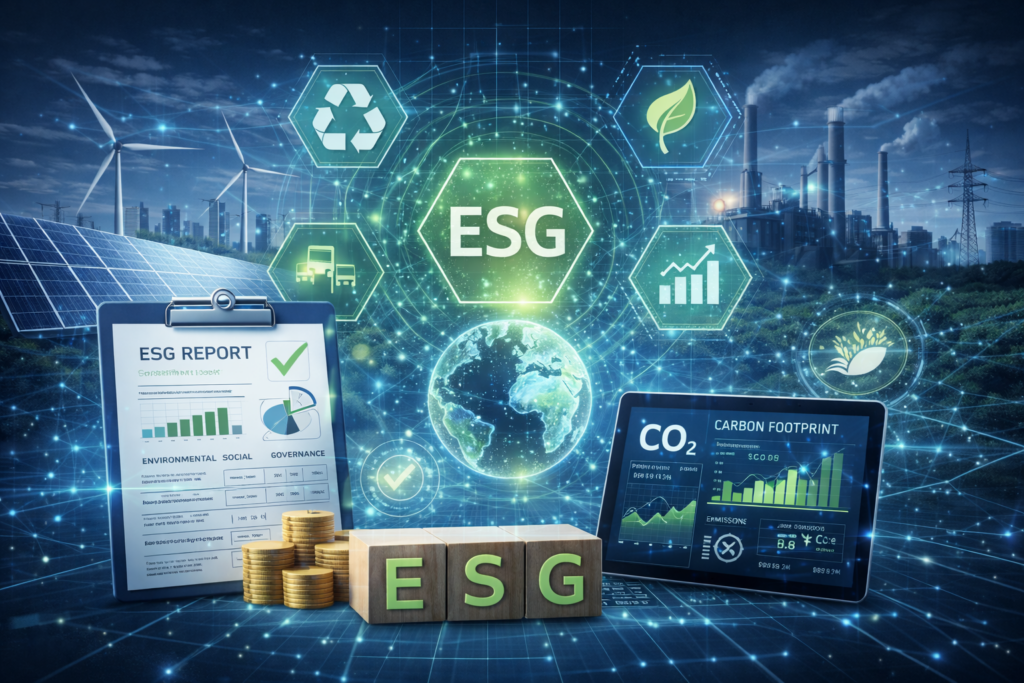
We support companies in taking a structured and reliable approach to ESG by combining environmental, energy, and analytical expertise. Our work is based on data, real measurements, and coherent processes—not on unsupported declarations.
Scope of Service
As part of our ESG and environment services, we provide, among others:
– support for ESG reporting in line with applicable standards
– analysis and calculation of organizational carbon footprint
– identification of emission sources and environmental impact
– structuring and consolidation of environmental and energy data
– preparation for regulatory and compliance requirements
– integration of ESG data with energy management systems
– support for Scope 1, Scope 2, and Scope 3 emissions reporting
– development of emission reduction plans
– verification and validation of environmental data
– preparation of materials for audits and inspections
The scope of services is tailored to the organization’s size, industry, and stage of ESG implementation.
Who It’s For
Our ESG and environment services are intended for:
– companies subject to mandatory ESG reporting
– organizations preparing for new regulatory requirements
– companies conducting non-financial reporting
– energy-intensive and industrial businesses
– developers and investors
– entities cooperating with large capital groups
– organizations seeking to structure and improve environmental data
We support both organizations at the beginning of their ESG journey and those looking to improve and standardize existing processes.
Business Benefits
Implementing a structured ESG and environmental approach enables organizations to:
– meet regulatory and market requirements
– reduce the risk of sanctions and non-compliance
– organize environmental and energy-related data
– strengthen credibility with partners and institutions
– prepare effectively for audits and inspections
– identify areas for real emission reductions
– link ESG initiatives with energy efficiency measures
– build long-term business resilience
Well-implemented ESG supports strategic decision-making and enables organizations to manage their environmental impact consciously and responsibly.
Data-Driven ESG
Our ESG approach is based on real environmental and energy data rather than estimates alone. We combine carbon footprint analysis with energy audits, energy consumption monitoring, and data digitalization to create a coherent system for reporting and managing environmental impact.
We treat ESG as part of a broader energy and operational transformation—not as a separate, isolated process.